What Information Is Needed to Design a Custom Industrial Inflatable
By Justin Russell •
The most useful starting point for a custom industrial inflatable is a description of the site challenge and what you need to achieve. A rough sketch is often enough to begin discussing whether an inflatable could suit the application and to form an initial budgeting estimate.
At PolyFusion WA, we work through the requirements with customers as the enquiry develops. You can approach us while the idea is still taking shape. The important thing is to share what you know and identify what still needs to be confirmed.
Explain the challenge and the intended outcome
Tell us where the product will be used, what it needs to do and how it fits into the work being carried out. Is the goal to control airflow, form a void, provide overhead protection or contain material during a shutdown?
A request for a particular size gives us a starting dimension. Understanding the purpose helps us assess whether that size and the proposed approach suit the job. If you have tried another method or product, explaining what worked and what caused difficulties is useful too.
Share a sketch and the measurements you have
A simple sketch can show the proposed position, the surrounding structure and the main dimensions. These details help us understand the geometry of an industrial inflatable. Photographs add context, particularly where surfaces are irregular or existing equipment occupies part of the space.
Mark which dimensions have been measured and which are estimates. If an existing drawing is available, tell us whether it reflects the current site conditions. That helps us avoid treating an assumption as a confirmed measurement.
For an initial discussion, the sketch does not need to explain how the inflatable should be constructed. Its purpose is to help us understand the application. As the enquiry moves towards formal quoting, measurements and the required function need to be confirmed.
Show us the route into the installation position
Access restrictions are one of the most common sources of difficulty we have encountered. The space where an inflatable will operate is only part of the information needed. We also need to understand how it will reach that position and how it will be removed.
We have seen overhead protection systems arrive on site only for access to be restricted by undersized openings or interfering infrastructure. Those restrictions need to be understood while the requirements are being discussed.
Useful information includes the dimensions of access openings, restricted headroom, obstructions along the route and the equipment available to move or position the unit. Photographs of the access route can be as useful as photographs of the final installation area.
Although an inflatable can be transported deflated, it still has weight and bulk. Checking installation requirements early helps establish whether the proposed system will be practical to install and what equipment or other provisions may be needed to assist installation.
Describe the operating conditions
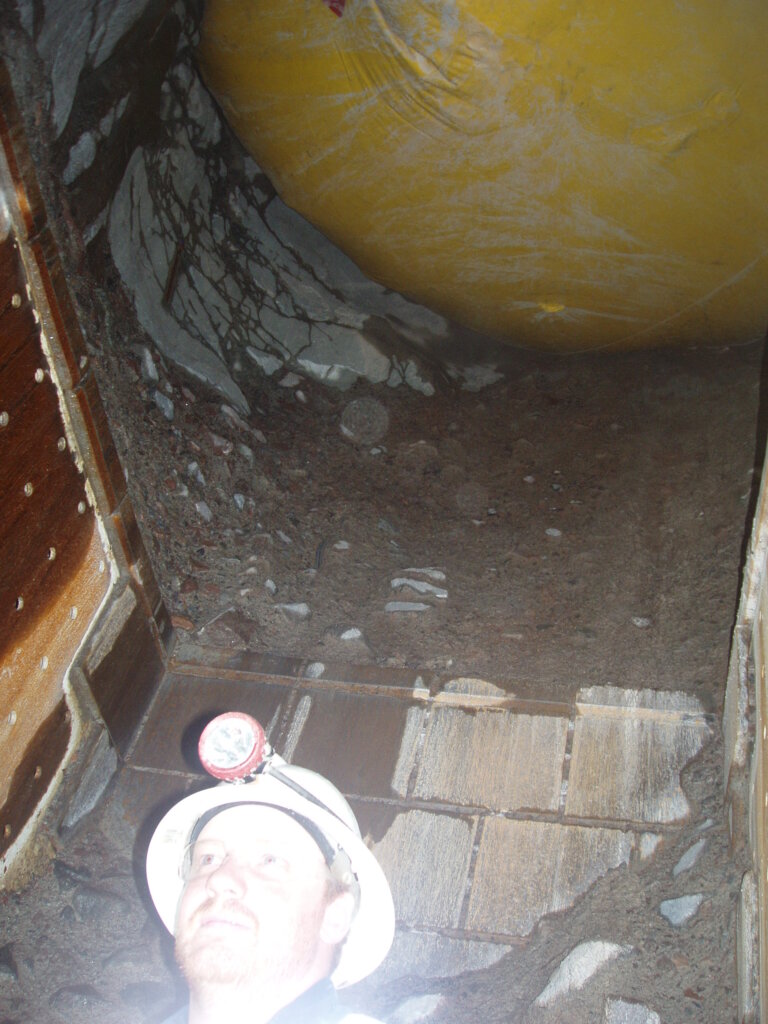
Tell us about the conditions the product will encounter, including heat, moisture, abrasion or contact with chemicals. Where relevant, information about pressure conditions and the available air supply also helps us assess the application. These details help inform material selection for industrial inflatables.
Explain how long the unit needs to remain in use, whether it will be moved between locations and any site requirements or limitations that apply. If information is unavailable, flag the gap so we can discuss what needs to be checked.
Confirm the requirements before formal quoting
At PolyFusion WA, an initial budgeting estimate is followed by confirmation of measurements and function before formal quoting. During the quoting process, we question the dimensions, installation requirements and limitations to clarify what is being supplied.
Even detailed plans can leave important questions unanswered when the manufacturer has little information about the application or site access. Direct discussion allows us to clarify those requirements with the people who will use the product.
Use experience from an existing product
If you are replacing or reordering a product you have already used, tell us how it performed and whether any changes would improve the product or the process for your team.
That might mean identifying something that made handling, installation or removal difficult. If the requirements and product remain unchanged, we can reproduce the existing product. Where changes are needed, your experience helps define what should be reviewed.
Start with the information you have
To begin a conversation, send us a description of the challenge and the intended outcome, a rough sketch with the dimensions you know, and any useful photographs. Include access restrictions or operating conditions you are aware of, and tell us what is still uncertain.
Contact PolyFusion WA to discuss your application. We can work through the questions with you and establish what further information is needed.