Why Geometry Matters in Industrial Inflatable Design
By Justin Russell •
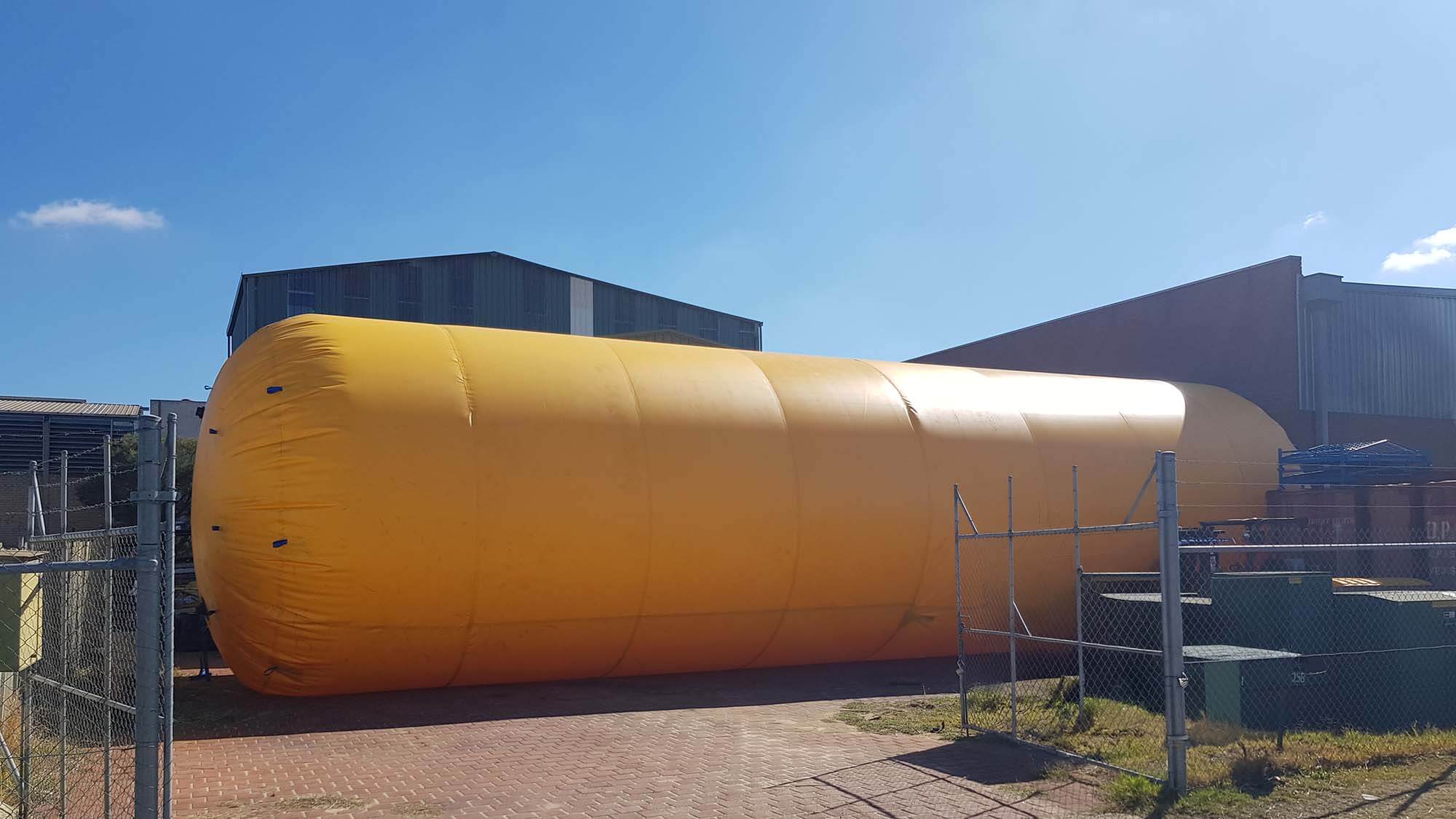
When specifying an industrial inflatable, overall dimensions are a starting point. The design also needs to account for the shape it takes under pressure, how it contacts surrounding surfaces, and how it will be handled before and after use.
Two inflatables with similar external dimensions can behave quite differently because of their construction and internal arrangement.
At PolyFusion WA, we consider geometry alongside the customer’s operating requirements. The aim is to achieve a shape that performs its intended function and remains practical to transport, install and remove.
Controlling the inflated profile
An overhead protection system (OPS) used inside an industrial vessel provides a useful example.
The inflatable needs to make contact with the vessel wall, but there may be limited space available above or below its installation position. Achieving the required diameter is only part of the design. Its inflated thickness matters too.
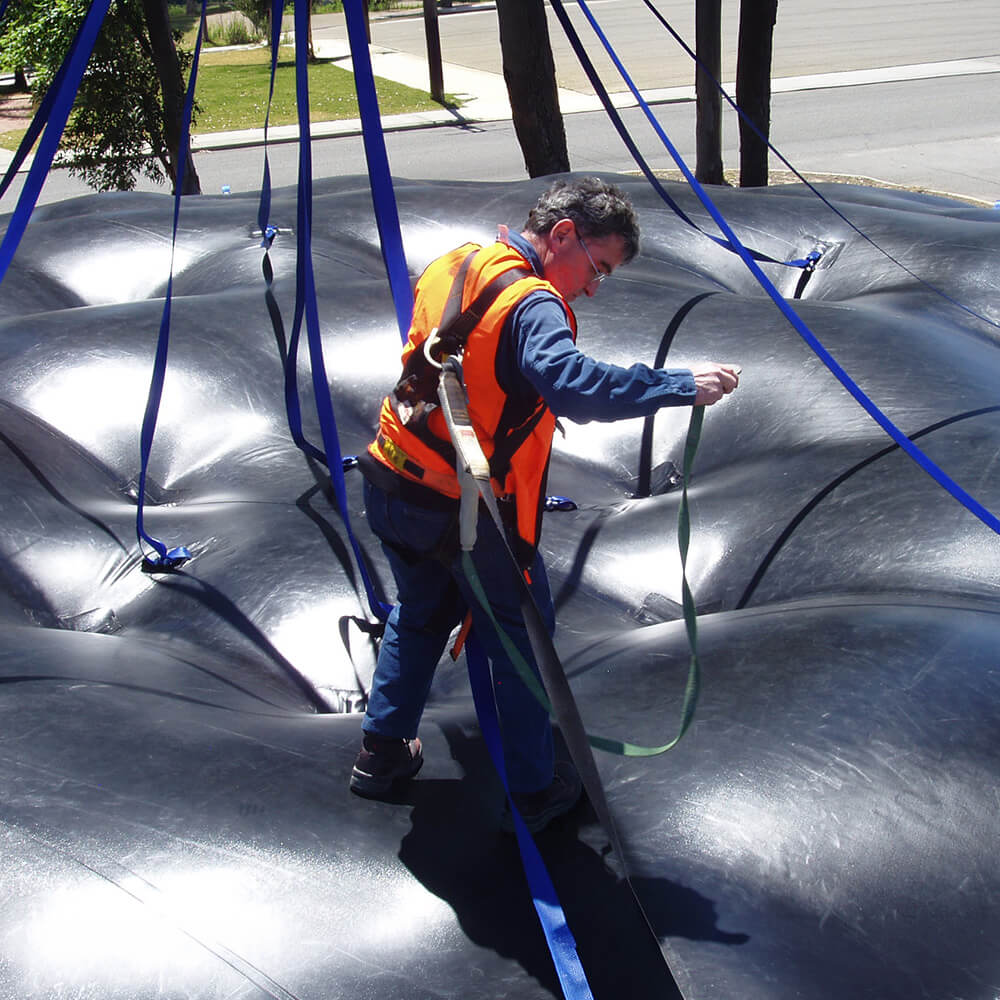
Internal restraints can control the separation of the upper and lower surfaces, helping maintain a lower profile while allowing the outer wall to contact the vessel.
There are several ways to achieve this, including internal baffles and webbing arrangements. The appropriate construction depends on the shape and performance required.
This is why a request for a particular diameter and thickness needs further discussion. Those dimensions describe the desired result, but the construction must allow the inflatable to achieve that result under operating conditions.
Designing for the opening that actually exists
The dimensions on a drawing may differ from the surfaces an inflatable will encounter.
Inside a refractory-lined vessel, wear can increase the internal diameter. An OPS designed only around the original dimensions may therefore struggle to achieve the intended wall contact.
Build-up can also change the available space and surface profile. An inflatable can often accommodate local variations, but the extent and shape of those variations still need to be considered.
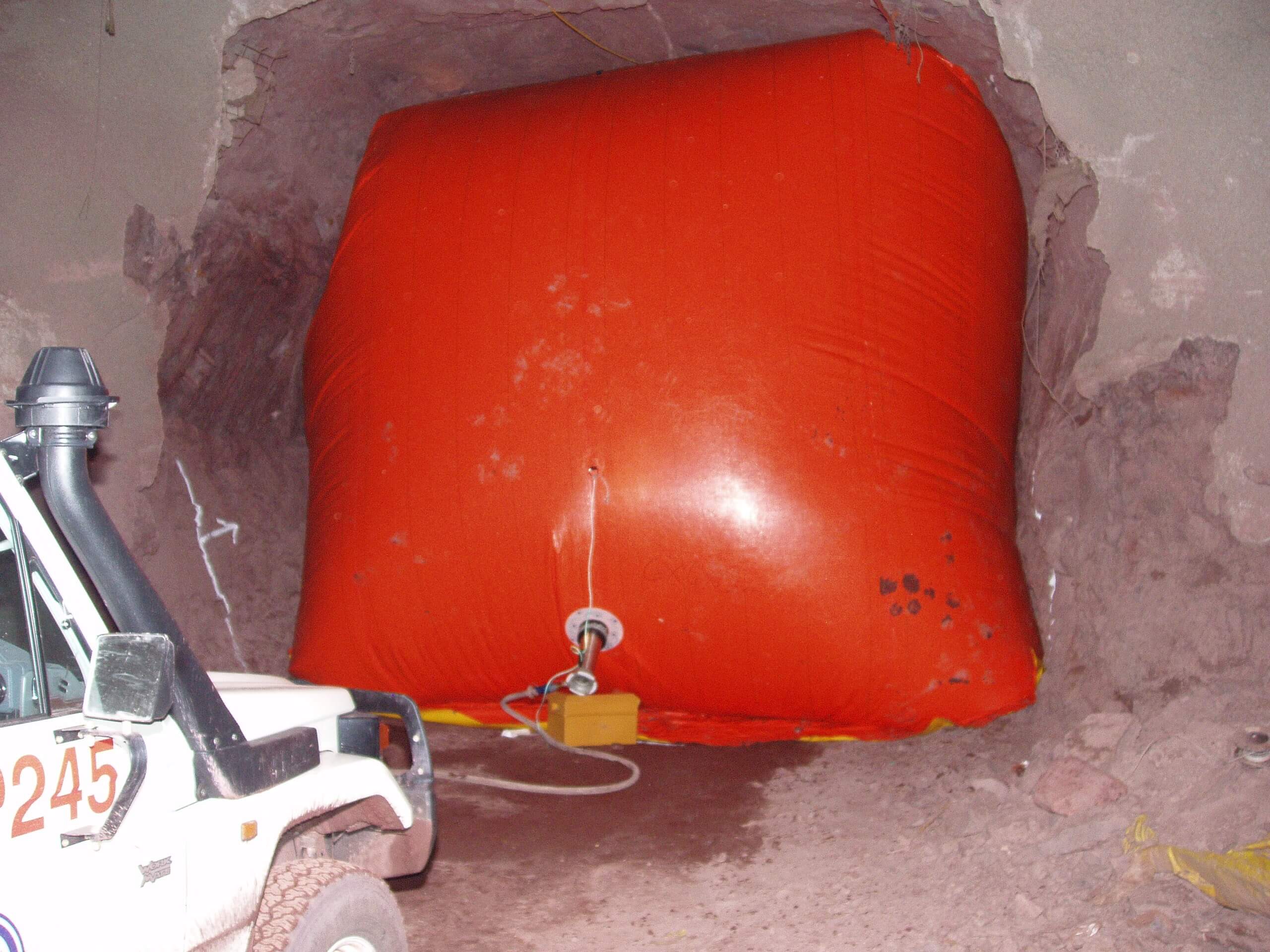
Underground openings present a similar challenge. Uneven ground is part of the application, so an inflatable ventilation control needs appropriate allowance for that irregularity.
However, increasing the size indefinitely does not solve every fit problem. Excess material can introduce folds and creases that complicate how the inflatable sits against the surrounding surfaces.
The design needs to balance sufficient allowance with a manageable fit. Current measurements and photographs help establish what the inflatable actually needs to accommodate.
Different ways to achieve the required shape
Internal restraints are one approach to controlling profile. Another is to use multiple inflatable cells.
A design may use several cells to create the required overall shape rather than relying on a single chamber with internal restraints. The choice depends on what the customer needs the system to achieve and how it must behave in use.
Multiple cells do not necessarily mean separate air supplies. In many of our designs, the cells are interconnected and share the same supply. In other applications, they are independently inflated and may operate at different pressures.
Cells can also perform different functions within the same system. One section may provide support for other sections that apply force.
These arrangements provide different design possibilities. Their suitability needs to be assessed against the application, handling requirements and intended operating conditions.
Pressure and geometry need to be considered together
Pressure acts across the inflatable’s surfaces. The size and shape of those surfaces influence the loads that the material, seams, restraints and attachment points must carry.
Changing the dimensions can therefore affect more than the amount of material required. It can alter how loads are distributed and what is needed to maintain the intended shape.
A design that works at one size cannot automatically be enlarged without reviewing its construction.
This is also why material strength alone does not determine whether a design is suitable. Geometry and the way the complete assembly carries load are part of the same assessment.
Related reading: Why Material Selection Matters in Industrial Inflatable Systems.
The deflated shape matters too
An inflatable spends part of its working life packed, carried, positioned or being removed.
Internal restraints affect how it behaves during those stages. They add weight and bulk, change how it folds, and influence how operators move and install it.
A lower inflated profile may be useful inside a vessel, but the construction needed to achieve it has practical consequences outside the vessel too.
Lifting-point positions also need to suit the installation. Surrounding infrastructure, available access and the way operators will deploy the unit can all influence where those points should be located.
Considering both inflated and deflated behaviour helps ensure the finished system is practical throughout its use.
Start with what the inflatable needs to achieve
For engineers, maintenance teams and project managers, the most useful starting point is a clear description of the job the inflatable needs to perform.
Overall dimensions matter, but so do the available space, actual contact surfaces, required profile and installation constraints.
Involving the manufacturer early allows these requirements to be considered together. Sometimes internal restraints will suit the application. Sometimes multiple cells will provide a more appropriate approach. In other cases, a simpler construction may meet the requirement.
At PolyFusion WA, we work through these considerations with customers to develop industrial inflatables suited to their application.
Have an application in mind? Share your drawings, measurements and site photographs with our team so we can discuss the shape and construction your project needs.