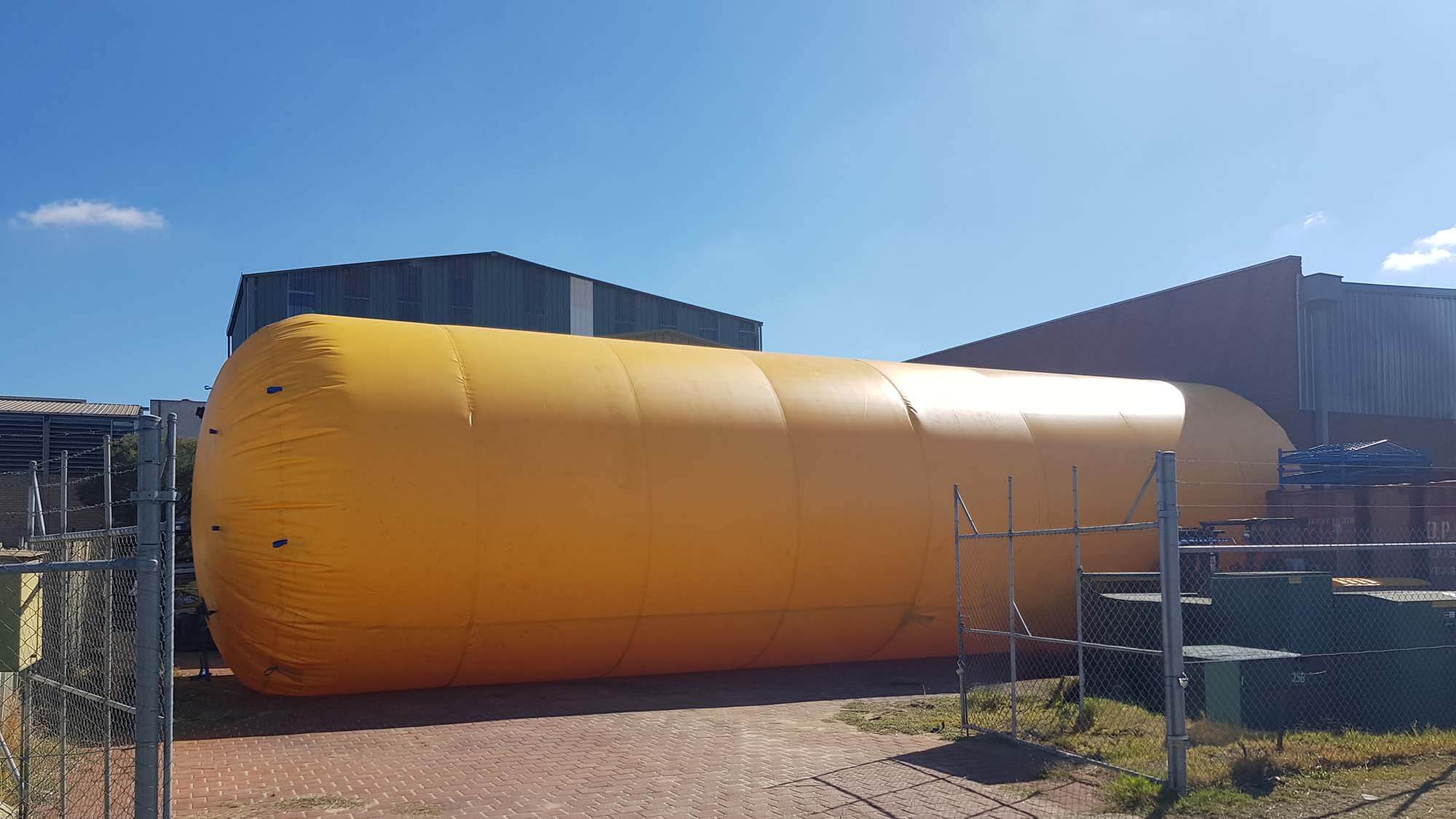
Why Repairability Should Be Considered Before You Buy an Industrial Inflatable
By Justin Russell •
When people invest in industrial inflatable systems, they often focus on the purchase price, operating pressure or installation time. Those are all important considerations, but there is another question that is often overlooked.
What happens when it gets damaged?
After manufacturing and repairing industrial inflatables for almost two decades, we’ve found that damage is rarely the end of an inflatable’s working life. In many cases, a professional repair can return it to service for a fraction of the cost of replacement.
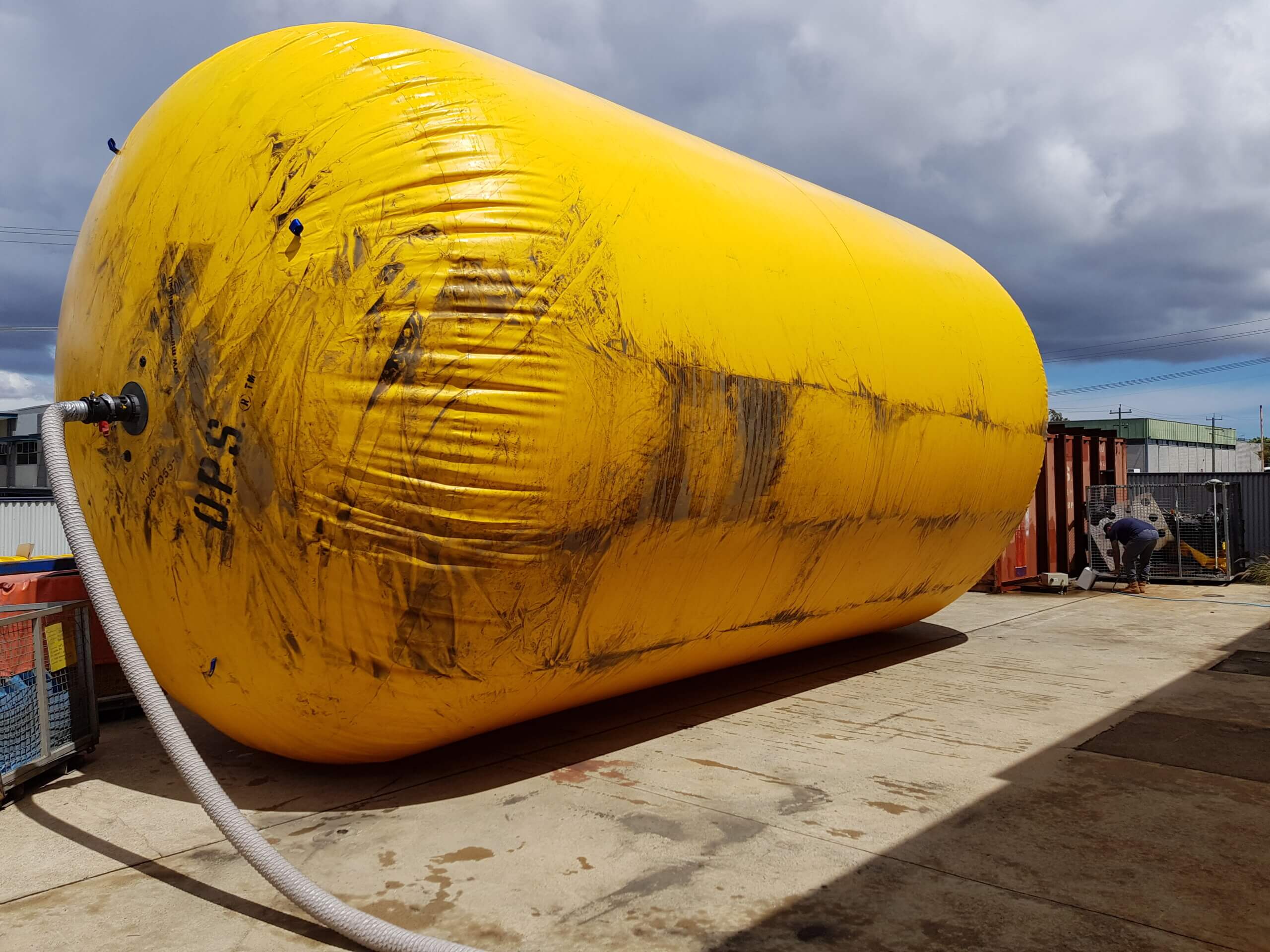
Most damage isn’t as dramatic as people imagine
When people think about inflatable systems, they often imagine a puncture causing an immediate failure.
In reality, that’s rarely what happens.
Many industrial inflatables, including underground ventilation controls, operate at relatively low pressures. If an inflatable comes into contact with a protruding rock bolt or a piece of mesh, the material will often simply seal around the object while continuing to operate. The result may be a small increase in air consumption, but not necessarily a loss of function.
It’s only when operating pressures become significantly higher that small punctures become much more critical.
This is one of the reasons industrial inflatables perform so well in demanding environments.
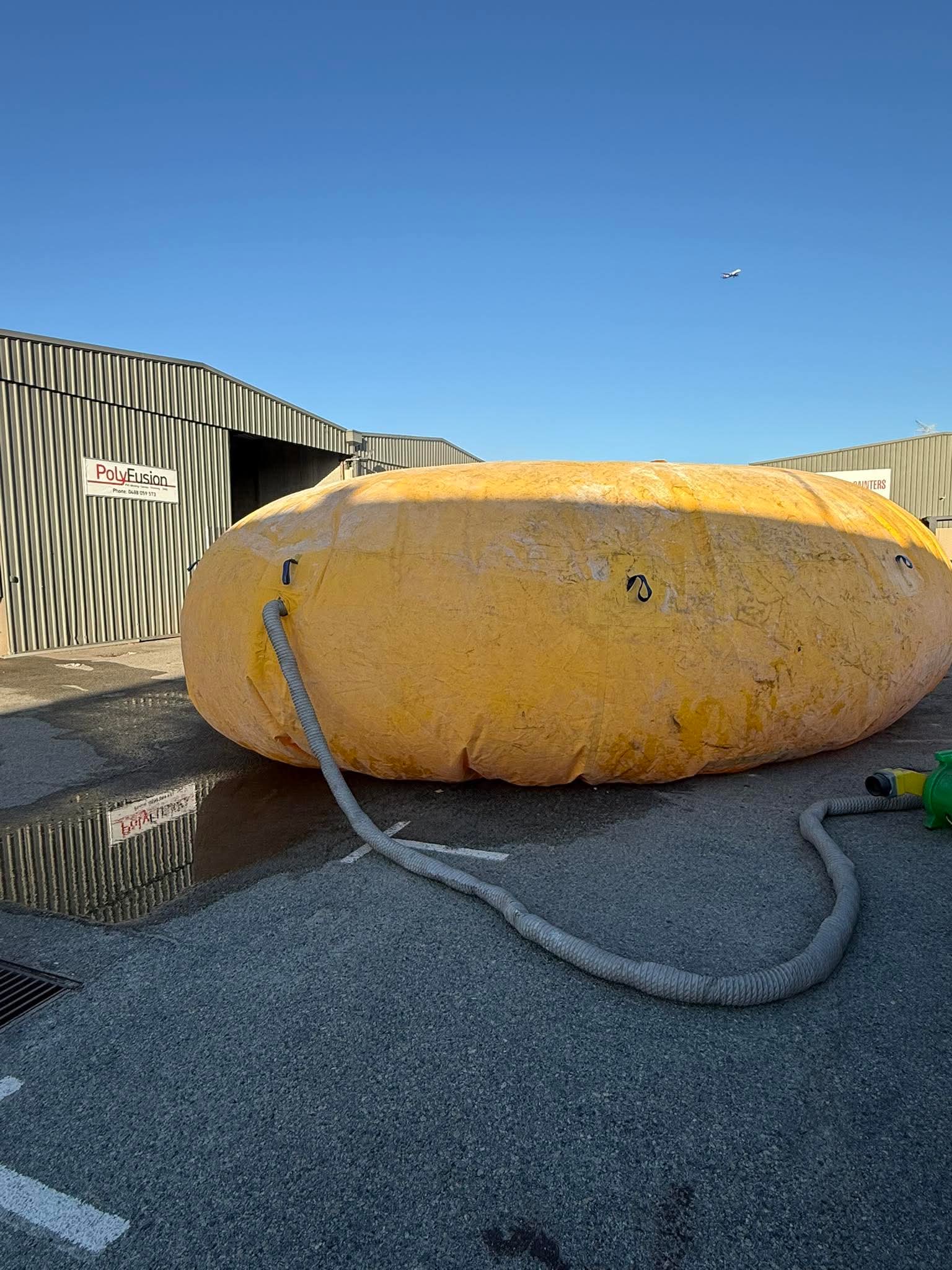
Where does damage actually come from?
People often assume the biggest threats are forklifts, welding sparks or major accidents.
Those things certainly happen, but in our experience they aren’t the most common causes of repairs.
The majority of damage comes from day to day interaction between people and the equipment.
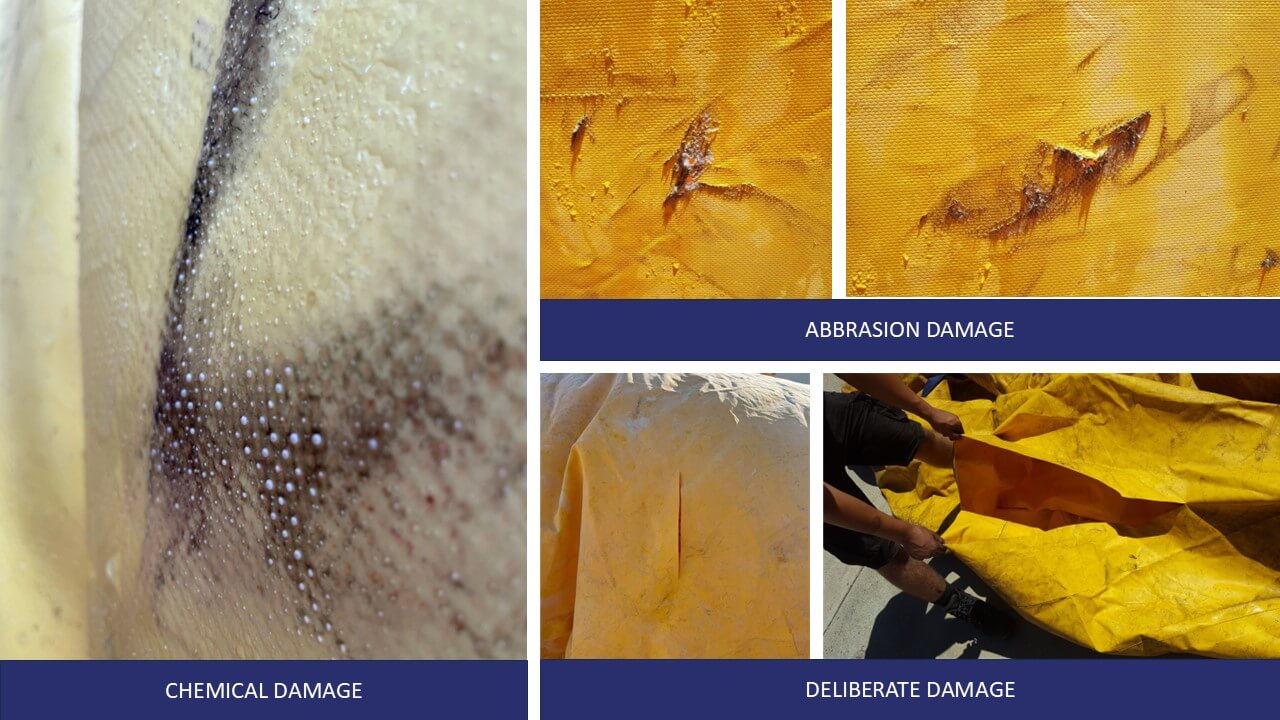
Small punctures.
Abrasion from dragging.
Cuts during handling.
Even deliberate damage where equipment has been intentionally cut.
The common factor is human interaction.
Fortunately, many other forms of damage can be significantly reduced through good planning, operator training and thoughtful design. Protective covers can shield equipment during hot work. Proper lifting methods reduce unnecessary abrasion. Suitable storage protects materials from unnecessary exposure.
Good operating practices often prevent damage before it occurs.
Repair starts with understanding what happened
When a damaged inflatable arrives in our workshop, repairing it isn’t the first step.
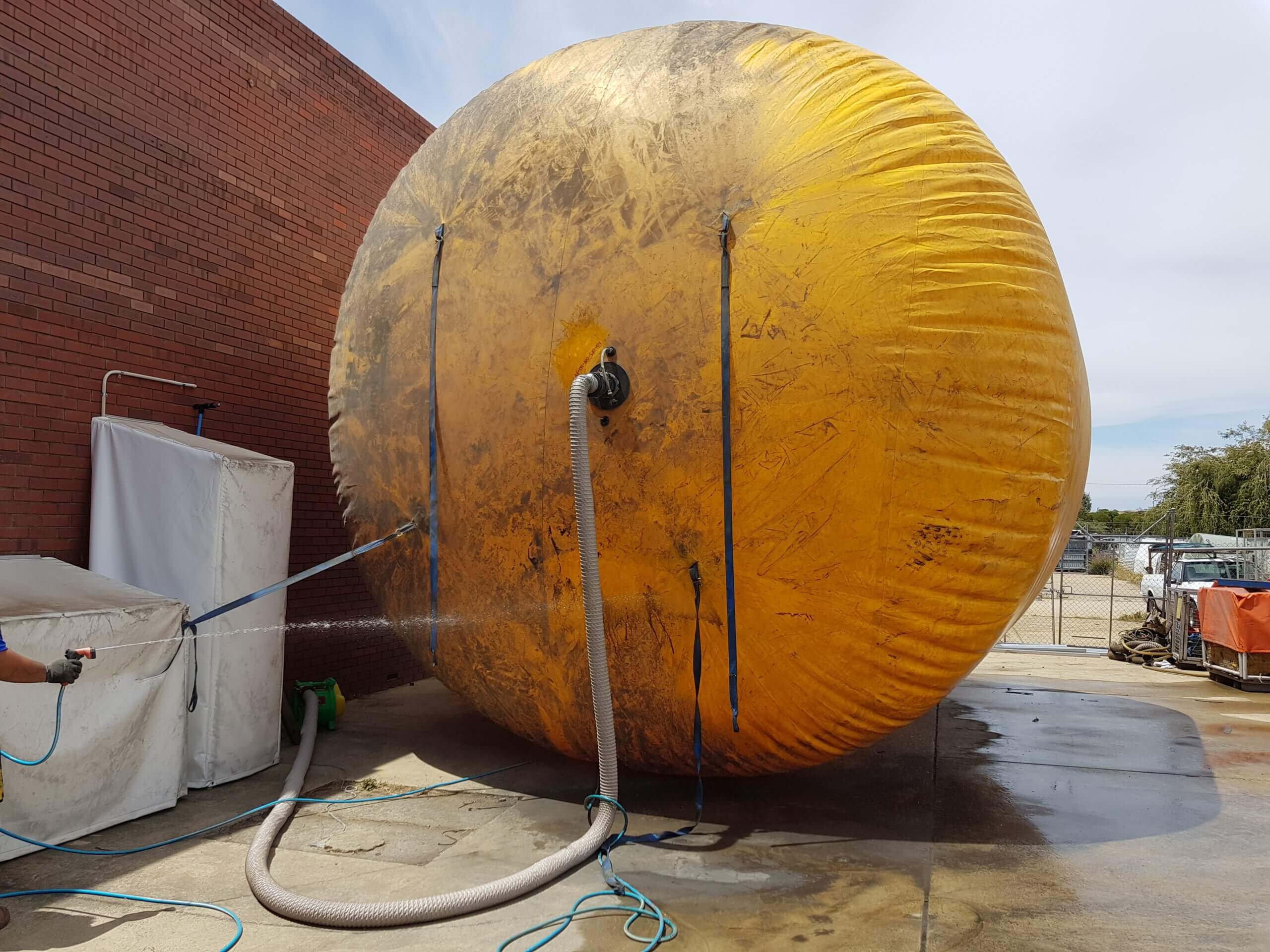
Cleaning is.
Many systems arrive covered in mud, rock dust and site contamination. Before any assessment can begin, the inflatable needs to be thoroughly cleaned and dried.
Only then can we inspect the damage properly.
Often the damage tells a story.
The direction of a tear may indicate how the inflatable was handled. The characteristics of a burst can reveal whether the unit has been over pressurised. Abrasion patterns often identify repeated contact points during installation or removal.
Understanding why the damage occurred is just as important as repairing it. It helps prevent the same problem happening again.
A proper repair is more than applying a patch
Temporary repairs certainly have their place.
On site, applying a glued patch may be enough to safely complete a planned task or keep production moving until the inflatable can be removed.
A permanent repair is different.
The damaged area must first be cleaned using appropriate cleaning products to remove contamination from the PVC surface. If contamination remains between the repair patch and the parent material, the welded joint may not achieve the strength required for long term service.
Once prepared correctly, new PVC can be welded back into the inflatable, restoring the integrity of the structure.
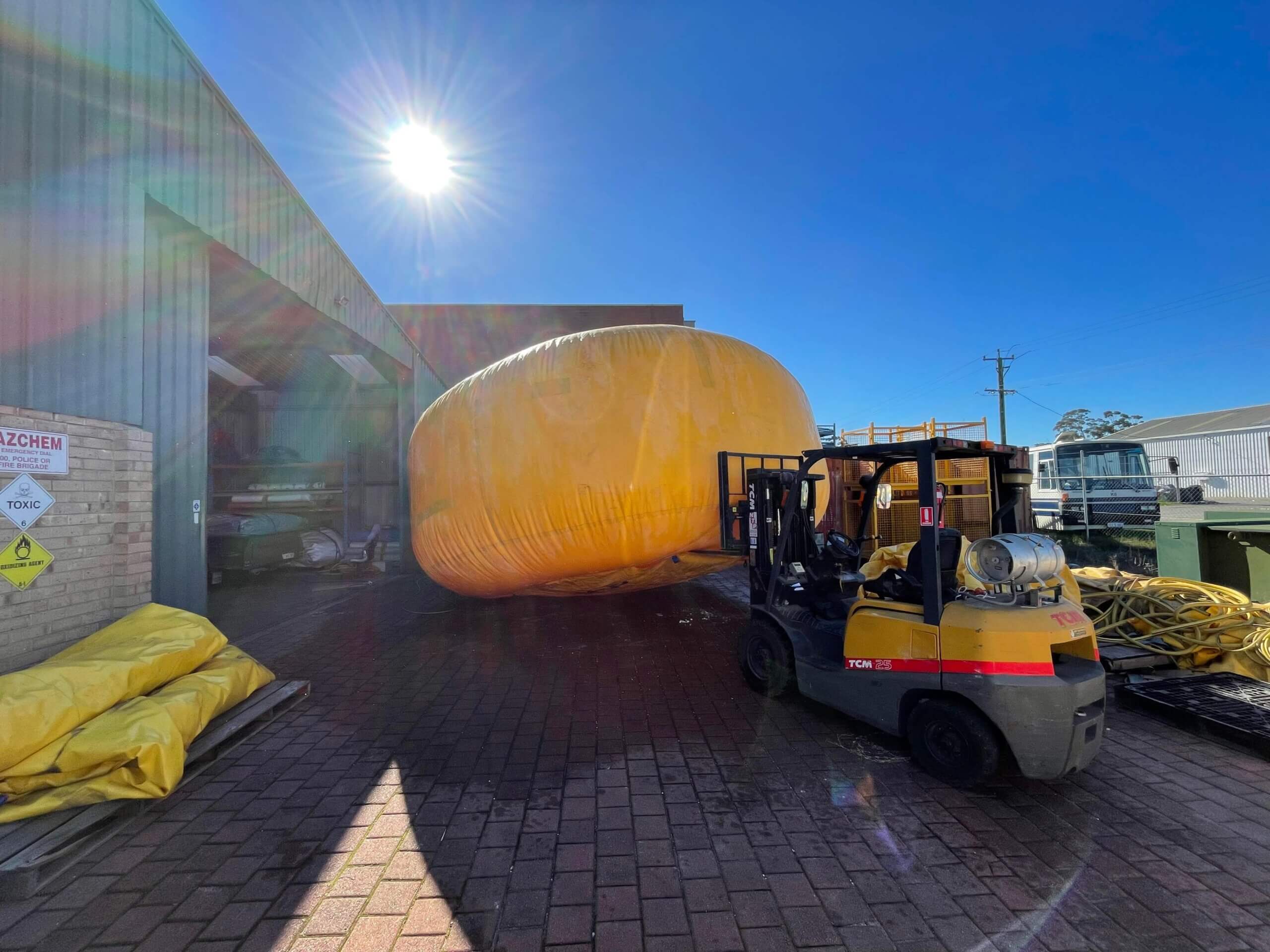
Depending on the damage, repairs may involve a simple patch, replacing valves, repairing lifting webbings or, in some cases, removing and replacing entire sections of the inflatable. Large repairs are entirely possible when the surrounding material remains in good condition.
Knowing when not to repair
Repairability doesn’t mean every inflatable should be repaired.
Eventually, every PVC product reaches the end of its service life.
If the fabric has suffered widespread chemical attack, prolonged UV degradation or has simply reached an age where the material has lost its structural integrity, repair is no longer the responsible recommendation.
While many industrial PVC products can provide well over ten years of service when properly cared for, storage conditions, operating environment and previous use all influence their lifespan.
Sometimes replacement is the safest and most economical option.
Routine care extends service life
The easiest repair is the one you never have to make.
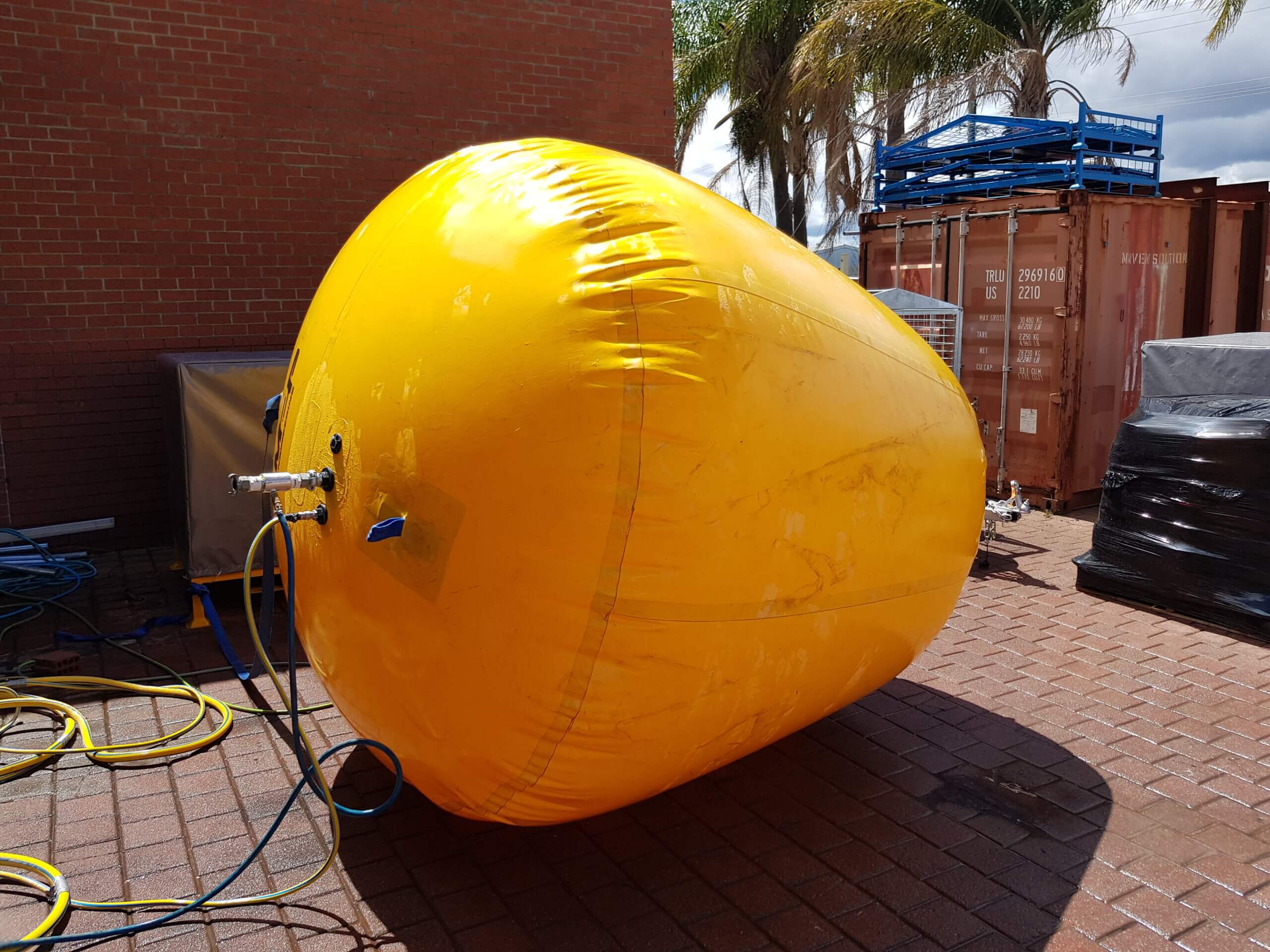
After each deployment, inflatable systems should be cleaned, inspected and allowed to dry before being packed away.
Storage areas should be protected from direct sunlight, chemicals, oils and grease. Equipment should never be dragged unnecessarily during handling, and transport systems should protect the inflatable from avoidable damage.
This routine inspection is also the ideal opportunity to identify any small punctures or wear before the next deployment.
While temporary field repairs may sometimes be appropriate, any damage intended for long term service should be assessed and repaired by qualified personnel using suitable repair methods.
Looking beyond the purchase price
Industrial inflatables deliver value because they reduce installation time, improve safety and can be reused repeatedly.
That value increases significantly when the equipment can also be repaired economically.
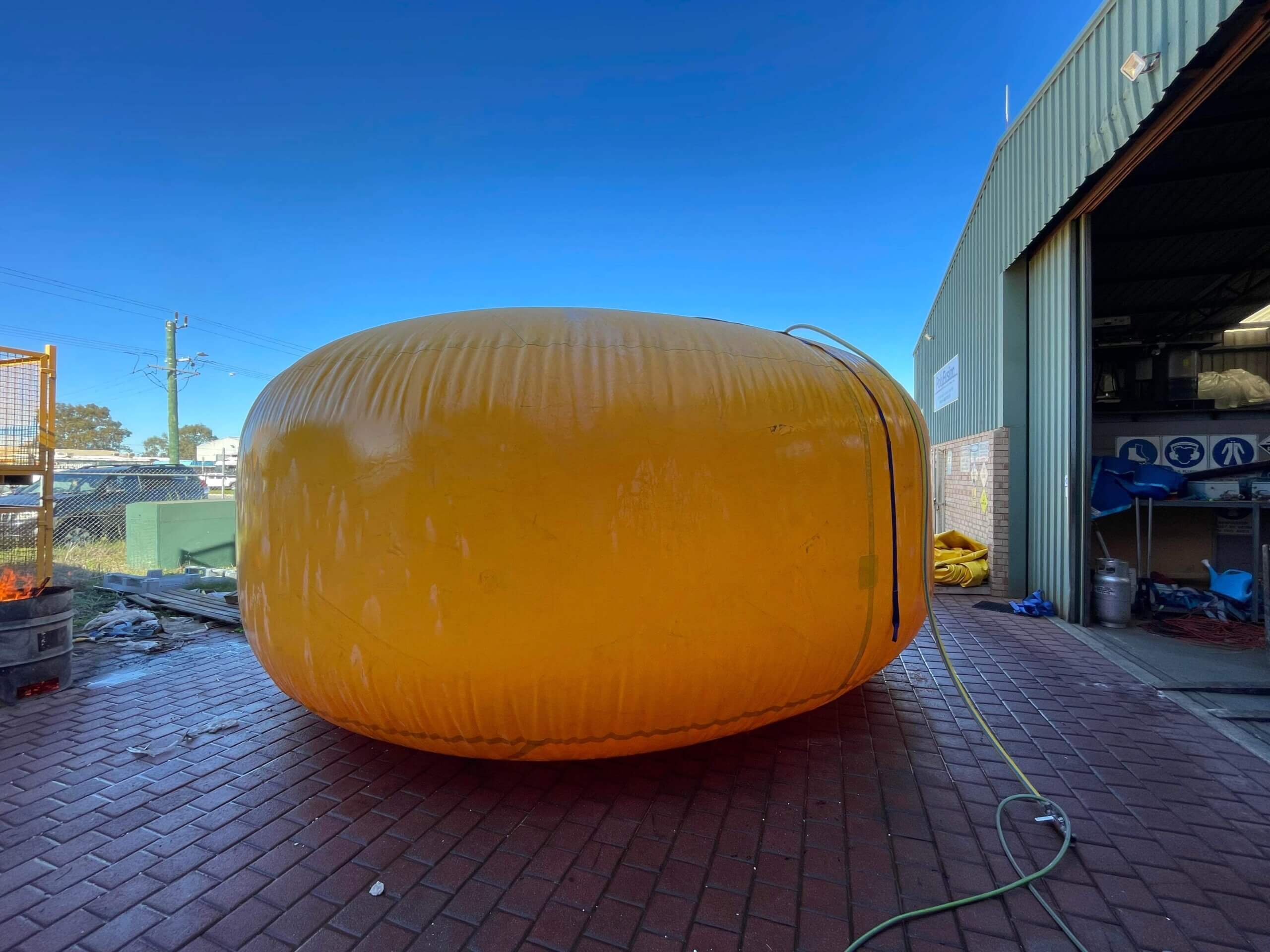
A professional repair is typically only a small fraction of the cost of manufacturing a new inflatable. Extending the service life over many years spreads the original capital investment across countless deployments, making the total cost of ownership substantially lower than repeatedly replacing damaged equipment.
Repairability isn’t simply about fixing damage.
It’s about protecting your investment for the long term.
When evaluating any industrial inflatable system, it’s worth asking not only how it performs on day one, but how easily it can still be performing years later.