Why Industrial Inflatables Systems Fail
By Justin Russell •
Why Industrial Inflatable Systems Fail
And Why Harsh Industrial Environments Expose Weak Assumptions Quickly
When industrial inflatable systems fail, the immediate assumption is usually simple:
“The material wasn’t strong enough.”
In reality, most industrial inflatable failures have very little to do with pure material strength alone.
Industrial environments are messy.
Systems operate in:
- heat,
- abrasion,
- confined spaces,
- changing airflow,
- difficult access conditions,
- shutdown pressure,
- and around people working under real operational constraints.
Most failures occur because assumptions that looked acceptable on paper collide with harsh operating reality.
At PolyFusion WA, years of manufacturing, installing, troubleshooting and observing industrial inflatable systems in the field have shown that long-term success usually depends far more on operational understanding than theoretical perfection.
Most Failures Start Long Before Inflation
One of the biggest misconceptions about industrial inflatable systems is that failure begins during operation.
In reality, many problems are introduced much earlier:
- during design,
- manufacturing,
- transport,
- handling,
- installation planning,
- or operational handover.
A system can be manufactured exactly as specified while still being fundamentally difficult to install or operate successfully in the field.
There is a major difference between:
- manufacturing a system,
and - understanding how it will actually behave operationally.
A pure manufacturer may simply fabricate what appears on the drawing.
A company with practical deployment experience will question:
- geometry,
- handling,
- inflation behaviour,
- access constraints,
- load paths,
- rigging requirements,
- pressure management,
- and deployment sequencing
before manufacturing even begins.
Small design changes can dramatically improve:
- installation success,
- handling,
- operational safety,
- durability,
- and long-term reliability.
Geometry Destroys More Systems Than People Realise
One of the most common contributors to inflatable problems is poor geometry.
Many engineers design systems based around the required final shape while underestimating how the inflatable will actually behave:
- during handling,
- during insertion,
- during inflation,
- and under real site conditions.
Geometry affects:
- stress concentrations,
- seam loading,
- deformation behaviour,
- force transfer,
- fatigue life,
- and installation practicality.
A poor shape can destroy even excellent materials very quickly.
One of the biggest lessons learned from field deployment is that inflatable systems are dynamic structures.
They move.
They deform.
They shorten during inflation.
They transfer load into surrounding structures and lifting equipment.
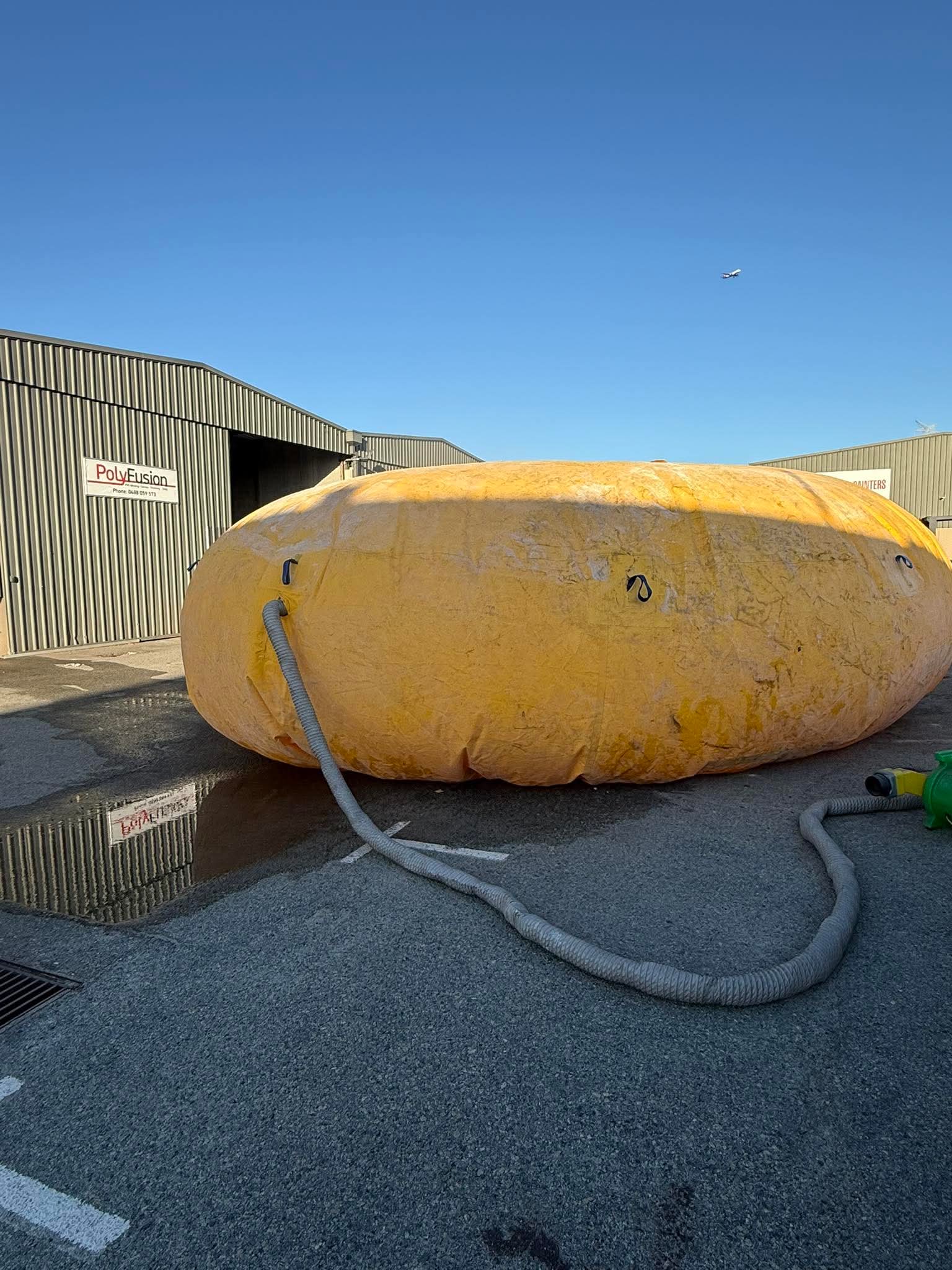
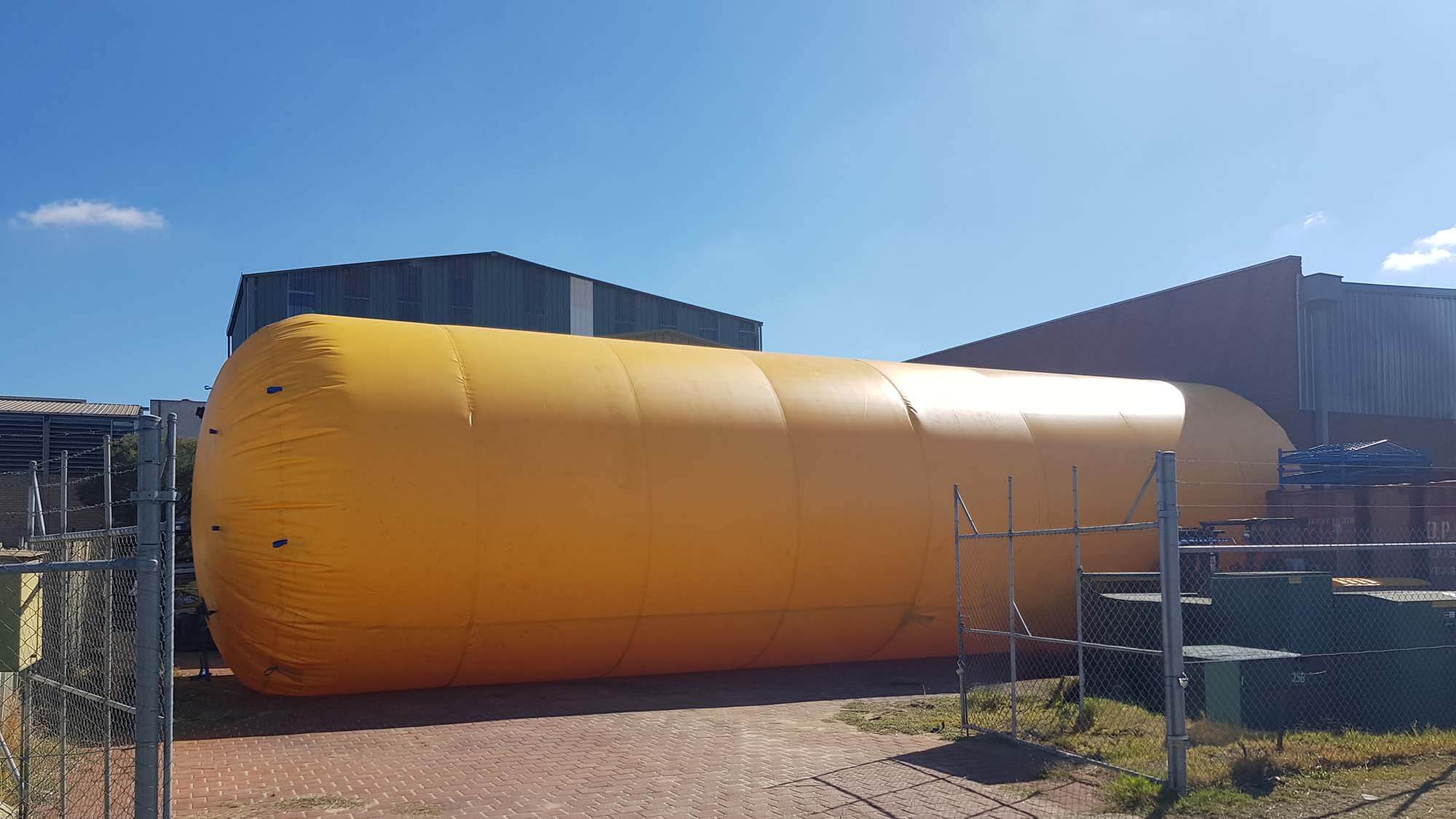
For example, inflatable overhead protection systems (OPS) will often shorten as they inflate.
If installers or lifting crews are not aware of this behaviour, substantial unexpected loads can develop in rigging systems during deployment.
If not managed correctly, this can result in:
- lifting equipment overload,
- system damage,
- rigging failure,
- or dangerous installation conditions.
Real Environments Change Everything
A technically correct design can still become operationally problematic once real environmental conditions are introduced.
One inflatable overhead protection system installation in the UK highlighted this clearly.
The system had been properly engineered and manufactured. Site preparations had been completed and the deployment plan appeared straightforward.
However, the cold operating environment dramatically increased material rigidity while the system was uninflated.
During the first installation attempt, the OPS became extremely difficult to insert into the furnace opening and risked being damaged before deployment had even begun.
The installation team stopped and reassessed the approach, eventually using ratchet straps to compress the structure while feeding it into position before releasing the restraints internally.
The OPS ultimately performed successfully during the shutdown, however the removal process later damaged the system and replacement was required.
The long-term outcome was valuable:
the site later enlarged the access opening and continued using the inflatable OPS as part of its standard shutdown procedure.
The system itself worked.
The deployment assumptions required improvement.
Industrial Environments Expose Weak Assumptions Quickly
One of the most dangerous things in industrial environments is misplaced confidence in assumptions that have never been validated under real operating conditions.
A design may appear completely safe on paper while becoming problematic once:
- airflow,
- uneven geometry,
- restricted access,
- heat,
- manual handling,
- time pressure,
- or human behaviour
enter the equation.
Many of the most important lessons in industrial inflatable systems are only learned during actual installations.
Hands-on deployment experience teaches:
- how systems behave dynamically during inflation,
- how airflow and ventilation influence handling,
- how surrounding structures affect deployment,
- how systems respond when mistreated,
- and how harsh environments gradually expose weaknesses over time.
Over years of installation work, failure patterns also become easier to recognize:
- abrasion signatures,
- seam behavior,
- overload indicators,
- contamination effects,
- pressure-related deformation,
- and handling damage
all leave forensic clues behind.
Most failures do not occur because the mathematics was wrong.
They occur because reality is imperfect.
“It Worked” Does Not Mean It Was Good
One of the realities of industrial system development is that many early designs technically succeed while still being operationally poor solutions.
Many installation crews have walked away from jobs saying:
“Well… at least it worked.”
Early inflatable overhead protection systems often combined rigid and inflatable structures to achieve the required profiles.
Technically, they worked.
Operationally, however, they were often:
- heavy,
- awkward,
- difficult to install,
- and unnecessarily complicated under shutdown conditions.
Over time, designs evolved toward:
- improved geometry,
- softer internal structures,
- simplified deployment,
- and reduced handling difficulty.
Pressure management systems followed a similar evolution.
Earlier systems often required constant monitoring and operator intervention.
Later generations introduced:
- pressure relief valves,
- alarm systems,
- remote monitoring,
- and electronic controls,
significantly improving operational reliability.
Long-term industrial success usually comes from reducing operational friction as much as improving technical performance.
Failures Are Not Always Caused By The Inflatable
One of the biggest misconceptions surrounding industrial inflatable incidents is assuming the inflatable itself caused the problem.
Industrial systems do not operate in isolation.
They rely on:
- lifting systems,
- access infrastructure,
- rigging,
- operators,
- surrounding equipment,
- ventilation conditions,
- and broader site environments.
In one installation, a lifting cable failed catastrophically during deployment operations.
The inflatable system itself was not overloaded, and lifting equipment certifications and pre-start checks had been completed beforehand.
The failed cable whipped violently through the work area and narrowly missed personnel during the incident.
The installation was immediately shut down and treated as a serious near miss.
Experiences like this reinforce an important reality:
industrial inflatable systems often become associated with incidents where the actual root cause may sit elsewhere within the broader operational environment.
Site Culture Matters More Than People Think
Another major factor influencing long-term inflatable system performance is site culture.
The way crews:
- communicate,
- prepare,
- handle equipment,
- follow procedures,
- manage time pressure,
- and maintain systems
can dramatically influence long-term reliability.
One of the biggest long-term risks is poor communication during handover and the gradual development of complacency over time.
Systems initially installed correctly can slowly drift away from proper operating procedures as:
- personnel change,
- shortcuts develop,
- undocumented adjustments occur,
- and operational familiarity reduces caution.
Many successful long-term installations depended heavily on developing:
- clear site-specific SOPs,
- aftercare procedures,
- inspection routines,
- and documented operating processes.
Embedding inflatable systems into formal site procedures dramatically improves long-term reliability because the operational knowledge survives beyond the original installation team.
Industrial Inflatables Succeed In The Real World
One of the most surprising things about industrial inflatable systems is how durable they can become in environments where most people initially assume they would fail almost immediately.
In one open-cut mining application in Papua New Guinea, inflatable plugs were used within blasting operations to maintain drainage systems through repeated blast cycles.
Most people would assume the inflatable systems would be destroyed immediately under those conditions.
Surprisingly, they repeatedly survived far longer than expected and remained operationally valuable enough for the site to continue purchasing replacement systems over several years.
Industrial inflatable systems often prove far more capable than people initially expect when:
- geometry,
- deployment methods,
- material selection,
- and operational realities
are properly understood.
Built For Real Operating Conditions
Industrial inflatable systems do not succeed because they look good on paper.
They succeed because:
- the geometry works,
- the system can actually be installed,
- operators understand it,
- procedures are maintained,
- and the design survives real industrial environments repeatedly over time.
At PolyFusion WA, the focus has always been practical:
Build systems for real operating conditions — not laboratory conditions.